
Punks and Skinheads of New York's East Village, 1984-1987
Between 1984-1987 I photographed the punks and skinhead community of the East Village in New York City. They lived in abandoned buildings in some of the seediest stretches of the city. Despite the drugs, poverty and violence, the creative impulse was there, turning rubble strewn vacant lots into urban gardens, abandoned buildings into housing, and anger into music—creating a community.
Check out the book: Punks and Skinheads of the East Village
CLICK STORE IN ABOVE MENU
-15-ab638b4.jpg/:/rs=w:365,cg:true,m)
Coney Island, Brooklyn, NewYork
This series explores the beach as a shared public space where people from different walks of life come together. I'm drawn to the many ways they inhabit this place, carrying their cultures, traditions, rituals, and everyday lives into the open. Through intimate moments of daily life and self-expression, these photographs reveal a place where differences are not only visible, but welcomed—a place where everyone belongs.

Italian Americans
On an assignment photographing musicians from Calabria, an anthropologist and I drove to a working-class neighborhood in New Jersey on a gray, overcast day. As we approached a modest house, we heard the haunting, otherworldly sound of a traditional bagpipe drifting through the neighborhood. The house seemed almost alive. Inside, we were welcomed into the basement, where tables overflowed with homemade food, wine was poured, and music, singing, and dancing continued throughout the day. Passing the house from the street, no one would have imagined the richness of the cultural life unfolding within.
That experience stayed with me. It revealed a world largely hidden from public view—a world where traditions, memories, and values were being quietly preserved and passed from one generation to the next.
-4e26ca1.jpg/:/rs=w:365,cg:true,m)
South Tyrol, Italy
The Savage Nomads, Bronx, New York
I grew up in Bolzano, a city in South Tyrol, a mountainous region in the Italian Alps. Although I have lived most of my life in New York, I have always felt deeply connected to the mountains and villages where I spent my childhood. Returning over nearly four decades, I photographed the people, traditions, and landscape that continued to draw me back.
After World War I, when the region was transferred from the Austro-Hungarian Empire to Italy, the descendants of its Austrian farming communities preserved their language, customs, and traditions while adapting to a new national identity. Throughout the year, festivals and religious celebrations—many with roots in the Middle Ages—continue to bring the community together. From June through September, farmers move their livestock to high mountain pastures, living in traditional stone huts and continuing the seasonal transhumance practiced for generations.
These photographs explore a community whose identity has been carried forward through landscape, work, ritual, and memory. They are also, for me, a return to the place that first taught me how deeply a landscape can become part of who we are.
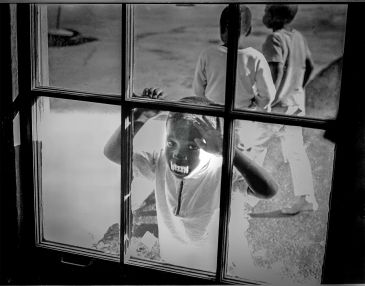
Houston, Texas, 1970
The Savage Nomads, Bronx, New York
The Savage Nomads, Bronx, New York
Houston was a city of striking contrasts when I photographed there in 1970. Beyond its high-rise office buildings and prosperous neighborhoods were communities where families lived in weathered wooden houses along unpaved streets lined with open drainage ditches. I went there expecting to photograph poverty, but I found something more enduring: people whose dignity, resilience, and sense of community remained intact despite difficult circumstances. Today, many of those neighborhoods have been transformed through gentrification and the people who once called them home have largely disappeared from the landscape. What became of them, I do not know.
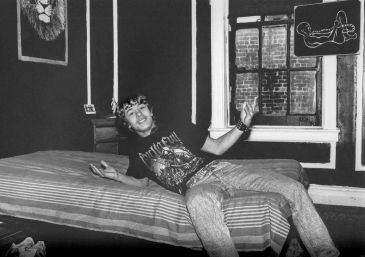
The Savage Nomads, Bronx, New York
The Savage Nomads, Bronx, New York
The Savage Nomads, Bronx, New York
Savage Nomads
In the late1980s, after completing my work on New York's punk scene, I was introduced to the Savage Nomads, a gang based in the South Bronx. Known for their violent history, they were often seen only through the lens of crime and fear. When I was invited into their headquarters, I encountered something far more complex.
Over two visits, I photographed moments rarely seen from the outside: young men relaxing, talking, waiting, and living together. Despite the realities of gang life, I found a close-knit community bound by loyalty, friendship, and rituals of its own. Like many of the communities I have photographed, the Savage Nomads had created a family within a world that often rejected them.
These photographs do not ignore the violence that surrounded their lives. Instead, they look beyond it to reveal the humanity that existed alongside it—the trust, contradictions, and sense of belonging that shaped their lives.
Shortly after these photographs were made, many members of the gang were arrested, bringing the project to an unexpected end. The images remain as a glimpse into a world that was rarely seen from the inside—one in which violence and vulnerability, hardship and loyalty, existed side by side.
.

Seeking the Sacred
Humans have always longed to believe that they are seen, loved, and accompanied by something greater than themselves. Across cultures and religions, people seek moments of communion with the Divine through prayer, music, ritual, pilgrimage, celebration, and acts of devotion. Although the forms differ, the longing is exceptionally similar.
In Hindu tradition, Darshan is the sacred encounter between the devotee and the deity—a moment in which one not only beholds the Divine but is also believed to be seen in return. It is an intimate exchange that expresses both love and grace.
Many of the photographs in this portfolio explore that universal search. At Brooklyn's annual Giglio Feast, more than one hundred men shoulder a three-ton wooden and steel tower honoring St. Paulinus, carrying and "dancing" it through neighborhood streets as an act of devotion and thanksgiving. In Hindu temples, worshippers wait patiently to receive blessings, offer prayers, and participate in rituals that affirm their connection to the Divine. The Hindu festival of Gudi Padwa celebrates renewal and the creation of the universe with joyful processions, music, color, and prayer.
Made over many years in New York City and beyond, these photographs do not seek to compare religions but to observe something they share: the enduring human desire to reach beyond ourselves—to seek meaning, hope, belonging, and moments of communion with the sacred.

Beauty Parlors, Chicago, New York
I photographed beauty parlors in Chicago and New York during the late 1970s. I was interested in exploring the world of working-class women who made visiting the beauty parlor a weekly ritual.
These salons were places where women came to look their best, but they were much more than that. They were neighborhood gathering places where friendships were nurtured, stories exchanged, meals shared, and laughter filled the room. For many women, they offered a brief respite from the demands of everyday life.
I was struck by the quiet intimacy of these spaces. The gestures of the hairstylists—washing, combing, cutting, and gently arranging each strand of hair—often felt less like routine work than acts of care. The women came for beauty, but they also came to be cared for. For a few hours each week, they received unhurried attention, conversation, and the simple pleasure of feeling seen.
Looking back, I realize these beauty parlors were small communities held together by ritual. Week after week, women returned not only to maintain their appearance, but also to renew friendships, affirm their sense of self, and experience the comfort of belonging.ghter with other regular patrons.